Contractors should ask for a deposit when the job requires materials, reserved schedule time, or meaningful upfront risk. The deposit should be explained before the customer approves the work and shown again on the final invoice.
A deposit is not just about getting money early. It is about confirming commitment, protecting your calendar, and creating a cleaner payment trail.
For a clearer comparison of upfront and milestone structures, see Advance Deposit vs Retainer vs Progress Payment.
Use the Advance Deposit Calculator to plan the requested upfront amount and estimated remaining amount before the customer approves the work. After money is actually received, use the Deposit / Balance Due Calculator to confirm the received deposit, remaining balance, or any overpayment credit.
Open Deposit CalculatorDeposit vs No Deposit: Practical Comparison
| Situation | Deposit Helps Because | No Deposit May Work When | Key Paperwork Needed |
|---|---|---|---|
| Custom Materials | You avoid buying job-specific items entirely out of pocket | Materials are inexpensive or already stocked | Estimate plus deposit receipt |
| Reserved Event Date | The customer confirms commitment to the date | The slot is easy to refill | Estimate, receipt, final invoice |
| Large Project | Cash flow is protected as work begins | Customer has approved account terms | Progress invoice or deposit invoice |
| Small Same-Day Job | Usually less necessary | Customer pays on completion | Invoice or receipt |
When A Deposit Makes Sense
- The job requires materials before work begins.
- You must reserve a date, crew, vehicle, or equipment.
- The work is custom and cannot easily be resold.
- The customer is new and has no payment history with you.
- The project is large enough that nonpayment would hurt cash flow.
Step-By-Step Deposit Workflow
- Explain The Deposit Before Approval. Use the Advance Deposit Calculator if you need to turn the proposed total into a clear deposit percentage or amount. Put that requested deposit wording in the estimate terms or notes so the customer sees it before agreeing to the work. The estimate total should still show the full proposed price.
- Collect Payment Through A Trackable Process. Use your normal payment method and document the date, amount, and purpose of the deposit.
- Issue A Deposit Receipt. Give the customer a receipt showing the deposit received and the remaining balance.
- Apply The Deposit On The Final Invoice. Show the full job amount, the deposit already paid, and the balance still due.
- Save The Estimate, Invoice, And Receipt Together. Keep the paperwork connected so the payment trail is easy to understand later.
How We Decide, In Practice
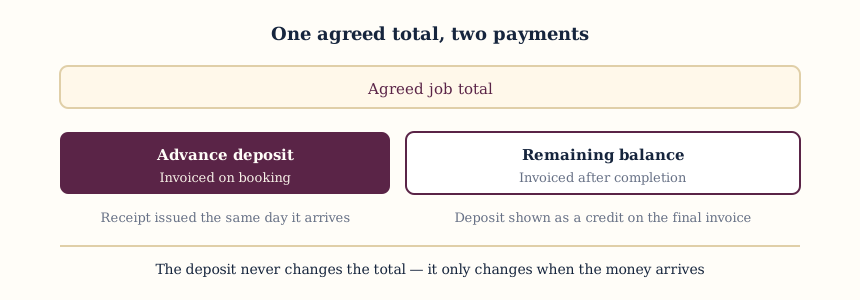
Our own rule has only two branches. One-off events pay 50% in advance, invoiced due on receipt and settled by card link at no extra cost to the client; the balance is invoiced once the event has finished. Contract clients pay no deposit at all and are billed in arrears on their normal cycle.
The line between the two is not the value of the booking — it is whether there is a contract and a payment history behind it. A first-time customer booking a modest job is a bigger risk than a long-standing client booking a large one, because with the first one you have nothing to fall back on. Ask what you would lose if they disappeared after you had committed staff or bought materials, and set the deposit to cover that, not to hit a percentage someone quoted online.
One detail worth copying: when the advance arrives we send a payment confirmation that also confirms the booking. It costs nothing and it answers the question the customer was actually going to ask next.
Use ClearPaperwork to calculate the requested advance deposit, create an estimate with optional deposit wording, issue an invoice when payment is due, and confirm received deposits, remaining balances, or overpayment credits without storing customer data on a server.
Use Advance Deposit Calculator Create An EstimateDeposit Wording Examples
Simple Scheduling Deposit
Use the Advance Deposit Calculator to create wording like this from the project total and your chosen deposit percentage or amount.
A 25.00% Advance Deposit Is Required Upon Approval To Reserve The Service Date. The Estimated Remaining Amount Will Be Invoiced Upon Completion Unless Otherwise Agreed In Writing.
Materials Deposit
Advance Deposit Applied Toward Materials And Project Start. Once Paid, The Deposit Will Be Credited Against The Final Invoice Balance.
Non-Refundable Language Caution
Be careful with “non-refundable” wording. Rules and customer expectations can vary, so review local requirements and use plain wording that matches your actual policy.
How To Show A Deposit On The Final Invoice
The final invoice should not hide the deposit. Show the total job amount, then show the deposit in Amount Paid / Deposit Credited, then show the remaining Balance Due. The earlier estimate should show the full proposed total and keep any deposit requirement in the terms or notes.
Example: Total job: 1,000.00. Deposit paid: 250.00. Balance Due: 750.00. If a later credit, return, or overpayment makes the credited amount larger than the total, the invoice should show Balance Due as 0.00 and list the extra amount separately as a Credit / Overpayment Balance.
Deposit Mistakes To Avoid
- Collecting a deposit without a receipt.
- Failing to apply the deposit on the final invoice.
- Using vague wording such as “money received” without job details.
- Changing deposit terms after the customer approves the estimate.
- Using strict refund wording without checking requirements that apply to your business.
This guide is for general business organization. It is not legal, tax, accounting, or financial advice.
Some links may be affiliate or partner links, which means ClearPaperwork may earn a commission at no extra cost to you.
Try Advance Deposit Calculator Try Deposit CalculatorFAQ
Should contractors ask for a deposit?
Often yes, especially when the job requires materials, reserved time, custom work, or subcontractor coordination. The amount and wording should match your business, customer expectations, and local rules.
How much deposit should a contractor ask for?
There is no single right amount for every job. Many businesses base the deposit on materials, scheduling risk, project size, and local requirements. The Advance Deposit Calculator can help turn a project total into a requested amount or percentage before approval.
Should the deposit appear on the final invoice?
Yes. The final invoice should show the total price, deposit paid in Amount Paid / Deposit Credited, and remaining balance so the customer does not feel charged twice.
Related: Event Vendor Deposits & Final Payments — how date-reservation businesses structure the same decision.